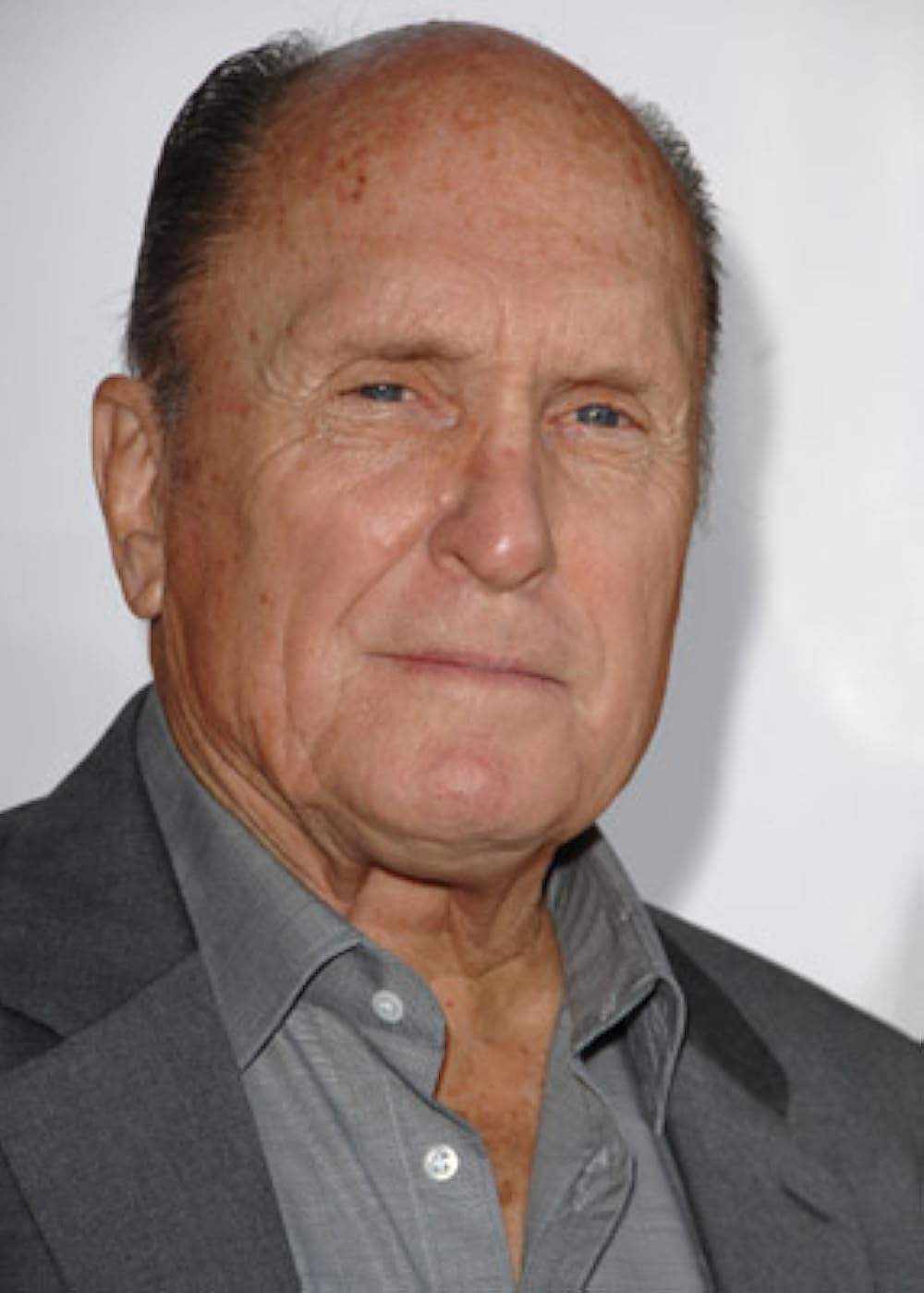
The End of an Era: Robert Duvall's Peaceful Passing at 95
The world of cinema recently bid farewell to a titan, a craftsman whose indelible performances have graced the silver screen for nearly six decades. Robert Duvall, one of Hollywood's most revered and versatile actors, passed away at the remarkable age of 95. His passing on Monday at his home in Middleburg, Virginia, marked the natural conclusion of a life exceptionally well-lived, a life that saw him evolve from a stage actor to an international cinematic icon.
For those inquiring, "Was Robert Duvall sick?" it's important to clarify that public reports surrounding his death did not indicate a prolonged illness or specific sickness as the cause. His passing at 95, surrounded by the quiet comfort of his home, suggests a peaceful culmination of an incredibly long and vibrant life. In an industry often associated with fleeting fame and personal struggles, Duvall's enduring presence and vitality across so many decades stand as a testament to his robust spirit and dedication to his craft. He was not just an actor; he was a force of nature, continuing to work well into his later years, a true inspiration of longevity and passion.
A Master of Disguise: Duvall's Unparalleled Versatility
Robert Duvall possessed an extraordinary gift for immersing himself completely into any character, no matter how minor, elevating every role he undertook into something profound and memorable. His ability to transform, to shed his own persona and inhabit another, was nothing short of legendary. This profound versatility allowed him to navigate a staggering array of genres and character types, leaving an indelible mark on cinematic history.
Consider his iconic portrayal of Tom Hagen, the stoic and fiercely loyal consigliere of the Corleone family in Francis Ford Coppola's
The Godfather. In a cast brimming with larger-than-life personalities, Duvall's quiet intensity and the depth he brought to Hagen made him an indispensable component of one of cinema's greatest ensembles. Then, in stark contrast, he unleashed the terrifying, almost hallucinatory madness of Lieutenant Colonel Bill Kilgore in
Apocalypse Now. His infamous line, "I love the smell of napalm in the morning," delivered with chilling casualness against a backdrop of utter chaos, became one of the most quoted and recognized phrases in film. This single performance earned him not only an Academy Award nomination but also a Golden Globe and a BAFTA, cementing his status as a master of dramatic power.
But his genius extended far beyond these towering roles. He commanded attention as the ruthless network executive Frank Hackett in Sidney Lumet's prescient
Network, a chilling study of media manipulation. He brought a surprising warmth and weary resolve to Sergeant Martin Prendergast in Joel Schumacher's
Falling Down, a police officer on the brink of retirement grappling with an escalating urban nightmare. Duvall had an uncanny knack for making secondary characters feel like the emotional anchors of a story, embodying everyone from cold, calculating businessmen and inflexible military leaders to tough, principled cops, declining country singers, eccentric preachers, and unyielding family patriarchs. His performances taught us that there are no small parts, only small actors – a maxim Duvall demonstrably disproved throughout his career.
From Broadway to Hollywood Stardom: The Early Years
Born in San Diego, California, Duvall's early life was one of constant movement, following his father, an admiral in the U.S. Navy, across various postings. This itinerant upbringing perhaps unknowingly prepared him for a career that would demand endless adaptability and an understanding of diverse human experiences. His journey into acting began not on the silver screen, but on the vibrant stages of New York. In the 1950s, he honed his craft in theater, quickly becoming a sought-after presence on Broadway, a crucible where many of Hollywood's greatest talents forged their skills.
His transition to television and then to film was gradual but inevitable. His cinematic debut came in a seemingly minor yet profoundly significant role: Boo Radley in the 1962 adaptation of Harper Lee's
To Kill a Mockingbird. Without a single line of dialogue, Duvall conveyed the character's mysterious kindness and vulnerability, proving his ability to communicate volumes through subtle gestures and expressions. Early attention also came from his role in the anti-war comedy
M*A*S*H, and later as the lead in George Lucas's dystopian science fiction film
THX 1138. It was through these captivating early performances that Francis Ford Coppola "discovered" him, leading to the career-defining role in
The Godfather that catapulted him to international fame and solidified his place in the pantheon of Hollywood legends. His trajectory from a disciplined military upbringing to a distinguished theatrical background provided a unique foundation for the depth and authenticity he brought to every role.
Accolades and Enduring Legacy: A Career Adorned with Honors
Robert Duvall's illustrious career was not just marked by critical acclaim but also by a long list of prestigious awards and nominations. His moment of ultimate recognition came in 1984 when he won the Academy Award for Best Actor for his portrayal of Mac Sledge, an alcoholic country singer seeking redemption, in Bruce Beresford's poignant drama,
Tender Mercies. This was just one of seven Oscar nominations he garnered throughout his career, a testament to his consistent excellence and profound impact. These nominations included powerful turns in films like
The Godfather and
Apocalypse Now, showcasing the breadth of his dramatic range.
Beyond the Oscars, Duvall was a recipient of numerous other esteemed honors, including a Golden Globe and a BAFTA for his unforgettable performance in
Apocalypse Now. His resume reads like a who's who of cinematic masterpieces, largely due to his discerning choice of collaborators. He worked with some of the greatest directors of all time, navigating seamlessly between genre cinema and more experimental, auteur-driven projects. His collaborations with Francis Ford Coppola defined an era, but his work with legends such as Robert Altman, Billy Bob Thornton, Lasse Hallström, George Lucas, and Joel Schumacher further showcased his adaptability and the trust he inspired in visionary filmmakers. It was Coppola, however, who truly understood how to harness Duvall's unique talents, placing him at the forefront of the "New Hollywood" movement of the 1960s and 70s, a period of profound artistic innovation in American cinema.
In the 1980s, Duvall continued to deliver memorable performances, starring alongside Robert Redford as the cynical sportswriter Max Mercy in the beloved baseball film
The Natural. His later career also saw him venture into directing, with films like
The Apostle and
Open Range, further proving his comprehensive understanding of storytelling. What aspiring actors can learn from Duvall's career is the paramount importance of dedication, the pursuit of versatility over typecasting, and the courage to choose challenging roles that allow for deep character exploration. He taught us that true artistry lies not just in acting, but in living a character authentically.
Robert Duvall's journey through Hollywood was a masterclass in acting, a testament to the power of dedication, versatility, and an unyielding commitment to character. His passing at 95, a life full of passion and purpose, reminds us of the profound impact one individual can have on an entire art form. His legacy is etched not just in the awards he won or the films he made, but in the countless unforgettable characters he brought to life. He leaves behind an unparalleled body of work that will continue to inspire and captivate audiences for generations to come. To delve deeper into his extraordinary contributions, consider exploring retrospectives like
Robert Duvall Dead at 95: Remembering His Storied Career and
Robert Duvall's Passing at 95: An Icon's Legacy Lives On, as we celebrate the enduring brilliance of a true cinematic icon.